


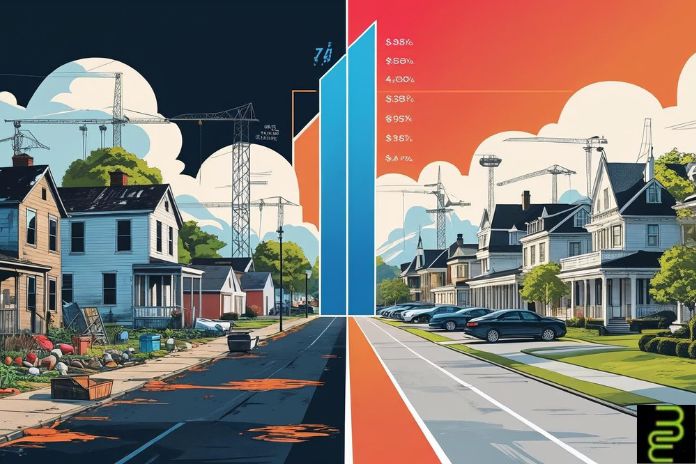
In the fast-moving world of AI, a quiet but high-stakes decision is unfolding. This one could either dramatically narrow the racial wealth gap… or explode it by $43 billion a year.
That’s the alarming, and oddly hopeful message from a recent McKinsey report. It explores how generative AI (gen AI) might impact Black economic mobility.
Spoiler: The outcome depends on what we do next.
The Risk: A Bigger Wealth Chasm by 2045
Let’s get real.
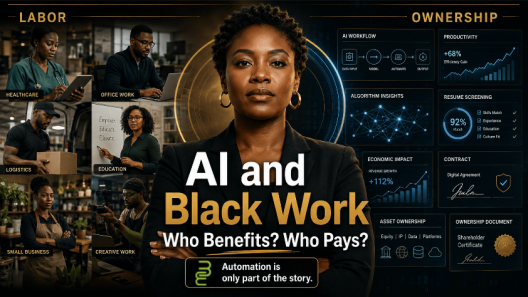
Black workers are overrepresented in the very jobs AI is poised to automate: customer service, data entry, entry-level coding.
These are roles that often serve as on-ramps to middle-income careers for those without four-year degrees.
If nothing changes, the new wealth created by gen AI could pass right by Black households. Deepening inequality by tens of billions annually.
But here’s the twist: AI doesn’t choose winners and losers. We do.
The Pivot: Future-Proof Skills > Future-Proof Jobs
The old advice used to be “find a job robots can’t take.” Now, experts say it’s time to build skills AI can’t mimic—think emotional intelligence, nuanced communication, and complex decision-making.
In short: Don’t chase job titles. Build a toolkit no algorithm can replace.
The Opportunity: Healthcare + Financial Inclusion
The McKinsey report isn’t all gloom. If deployed with intention, gen AI could become a powerful equalizer—especially in two sectors that hit home:
Black maternal health: AI can identify high-risk pregnancies earlier by integrating patient data and social factors. This could literally save lives in communities facing disproportionately high preterm birth rates.
Banking access: AI can power smarter, more personalized financial tools—connecting more Black consumers with traditional banking while steering them away from predatory lenders.
These aren’t hypotheticals. They’re tech-enabled pathways to economic dignity.
The Solution: Equity Isn’t Optional—It’s the Assignment
To avoid a dystopian tech future, McKinsey calls for:
Reskilling programs focused on non-automatable skills
Equitable design practices that include impacted communities
Fair access to AI tools and platforms—no paywalls, no exclusivity
We don’t need more disruption. We need direction.
So, What Can You Do?
If you’re a policymaker, tech leader, educator (or just someone who cares) here’s what matters:
Support community AI literacy initiatives in your area.
Advocate for unbiased AI datasets that reflect Black realities.
Mentor and hire Black technologists—from data scientists to UX pros.
Because here’s the bottom line: Gen AI isn’t just a tool. It’s a mirror. And what it reflects back will depend entirely on who’s holding the pen.
Final Thought
This isn’t just a tech story. It’s an economic justice story.
AI is arriving in your city, in your school district, in your wallet.
The question is: Will it rewrite the same old story?
Or can we finally write something new?
Want to go deeper?
Read the full McKinsey report here: The impact of generative AI on Black communities

Latest posts by normbond (see all)
- Nearly $300 Million for Community Lenders Could Disappear September 30. What Happens to the Credit Behind It? - September 23, 2026
- The Florida College Sports Fight Is Really About Media Money and Control - September 20, 2026
- Porsha Williams’ Fibroid Emergency Points to a Bigger Economic Cost for Black Women - September 19, 2026