


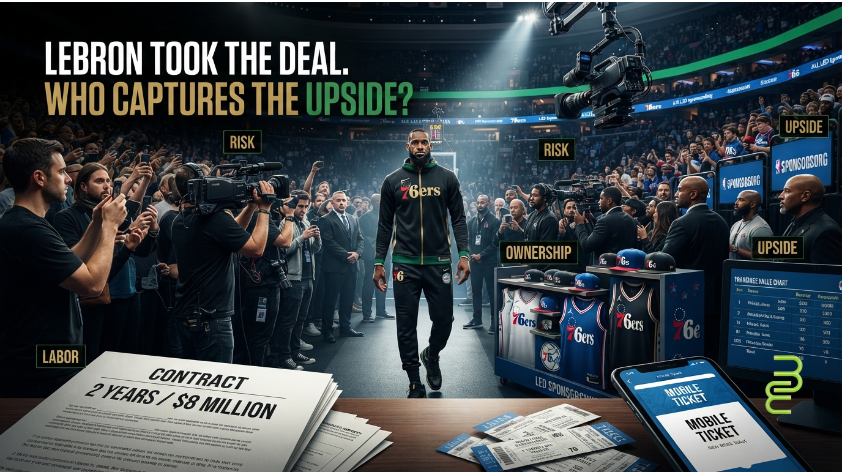
LeBron James’ reported decision to join the Philadelphia 76ers on a two-year, $8 million contract looks like a basketball headline.
But the deeper story is economic.
On the surface, this is about a superstar choosing one more run at a championship. Underneath it, this is about labor, leverage, franchise value, and the difference between what a player earns and what a team can make from the player’s presence.
LeBron is not just an athlete. He is a revenue engine.
His name can move ticket demand. It can increase national TV attention. It can lift sponsorship appeal. It can change merchandise sales, premium seat pricing, and the cultural relevance of an entire franchise. When a player with that level of brand power accepts a relatively modest deal, the question is not only what he is getting paid.
The question is: who captures the rest of the value?
I thought I was done when the season ended. I wasn’t ready to announce it, and I knew I needed some time to really decide, but I was pretty sure I played my last game. I was honest at that last press conference when I said I needed to look at myself and deicide if I still love
— LeBron James (@KingJames) July 24, 2026
The Contract Is Salary. The Value Is Bigger.
A reported $8 million contract may cover LeBron’s formal compensation from the team.
It does not fully capture the business impact of adding one of the most recognizable figures in sports.
For Philadelphia, LeBron’s arrival could create upside in several directions:
- higher demand for tickets and suites
- more national broadcasts and media attention
- stronger sponsorship leverage
- increased merchandise and fan engagement
- more urgency around a championship window
- broader franchise visibility at home and globally
That is the core economic distinction in this story.
The contract is one number. The commercial ecosystem around LeBron is much larger.
The 76ers Are Buying Labor and Attention
This is where the economics behind sports become clearer.
Teams do not just pay for performance. They also benefit from attention.
In the modern sports economy, attention is monetizable. It can be sold through broadcasting, partnerships, premium experiences, licensing, digital engagement, and brand association.
LeBron brings all of that.
That means the 76ers are not simply acquiring on-court production. They are acquiring one of the most proven audience-generating assets in sports.
And because the reported contract is relatively low by superstar standards, Philadelphia may preserve more financial flexibility than it would if it had to pay a max-level salary.
That is where capital enters the story.
A lower salary commitment can help a contender manage its roster, keep more depth, or deploy money elsewhere. In other words, LeBron’s pay structure may increase the team’s room to optimize the rest of the business and basketball equation.
Why Would LeBron Do It?
That question matters because it shifts the lens from salary to strategy.
LeBron may be trading some short-term direct income for something else: a stronger chance at another championship, a final legacy play, and additional long-term brand value.
For an ordinary worker, taking less pay would usually be a straightforward sacrifice.
For a global athlete with a decades-long business platform, the equation can be different.
Another title could strengthen his marketability, reinforce his legacy, expand future media and business opportunities, and deepen the value of everything built around the LeBron brand.
That does not mean the choice is not costly. It means the upside may be calculated differently.
Black Labor Still Powers the System
This story also fits a longer pattern in American sports and entertainment.
Black talent often creates the attention, the emotional investment, and much of the economic energy. But the most durable wealth often sits with ownership, media rights, infrastructure, and long-term asset control.
LeBron’s name can drive extraordinary value.
- But the team still owns the franchise asset.
- The league still controls the larger structure.
- Broadcast partners still benefit from audience demand.
- Sponsors still benefit from association.
- Arena and hospitality ecosystems can benefit from the traffic generated by star power.
That is the difference between being highly paid and owning the machine.
LeBron is unusually powerful because he has built business interests beyond basketball. Still, the structure remains familiar: Black labor can be central to value creation even when ownership remains elsewhere.
Who Captures the Upside?
Several groups could benefit from this move.
The 76ers
Philadelphia gains a star, a story, a late-career icon, and a commercial catalyst. If the team wins, the franchise captures basketball and business upside at the same time.
Broadcasters and platforms
LeBron still attracts viewers. More attention can mean more ad revenue, more conversation, and more value for the networks and platforms carrying those games.
Sponsors and brand partners
A team featuring LeBron can become more attractive inventory for brands looking to buy reach, prestige, and cultural relevance.
The local sports economy
Restaurants, bars, parking operators, nearby hotels, and game-day businesses often benefit when demand intensifies around a major team.
LeBron himself
He gains another shot at a championship, a fresh market, and potentially more long-term value around his image and legacy.
Who Carries the Risk?
The upside is real, but so is the risk.
LeBron carries age and performance risk. At this stage of his career, every season brings physical exposure and the possibility of decline.
The 76ers carry execution risk. If the roster does not stay healthy or the team falls short, the title upside may not materialize.
Fans carry price risk. Big-name arrivals often lead to higher ticket demand and more expensive access.
And Black communities watching this story should pay attention to the lesson underneath it: visibility is not the same as ownership.
Being at the center of the story does not automatically mean capturing the largest share of the wealth.
Why This Matters Beyond Basketball
LeBron’s reported 76ers deal is not just about one player switching teams.
It is a live example of how labor, brand equity, ownership, and capital work together in the modern sports economy.
It shows how a Black superstar can create value across multiple layers of business.
It also shows why ownership remains the bigger long-term question.
The athlete may earn the headline.
The franchise may keep the appreciating asset.
And that gap is where the economics behind the story really live.

Latest posts by normbond (see all)
- The Florida College Sports Fight Is Really About Media Money and Control - September 20, 2026
- Porsha Williams’ Fibroid Emergency Points to a Bigger Economic Cost for Black Women - September 19, 2026
- MACRO Bought ALLBLK. The Bigger Prize Is the Direct Relationship With Black Viewers. - September 18, 2026