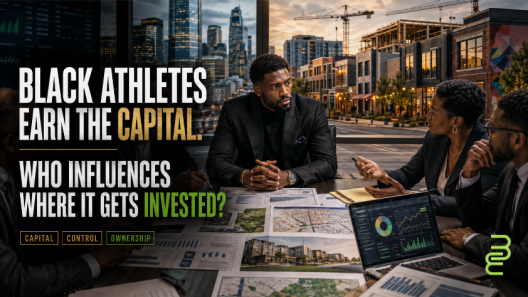



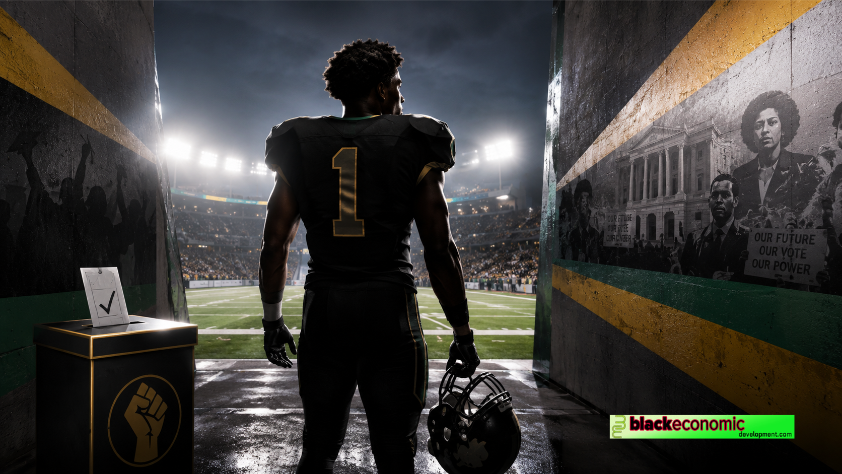
The NAACP is making a direct economic argument to Black athletes, families, fans, alumni, and consumers:
If public universities profit from Black athletic talent, those same institutions should not remain silent while their states weaken Black political power.
On May 19, 2026, the organization launched its “Out of Bounds” campaign, a national call for Black athletes and supporters to withhold athletic and financial support from public universities in states the NAACP says are attacking Black voting representation.
The campaign names eight priority states: Tennessee, Louisiana, Alabama, Florida, Mississippi, South Carolina, Texas, and Georgia.
The NAACP says the targeted flagship athletic programs generate more than $100 million in annual revenue, while public universities in those states collectively generate billions through college athletics.
That is the economic center of the story.
This is not only about a boycott.
It is about Black athletic labor, fan spending, NIL leverage, public university revenue, political representation, and who gets to profit from Black talent while Black political power is under attack.
Black Athletes Power the Product
College football and basketball are not just games.
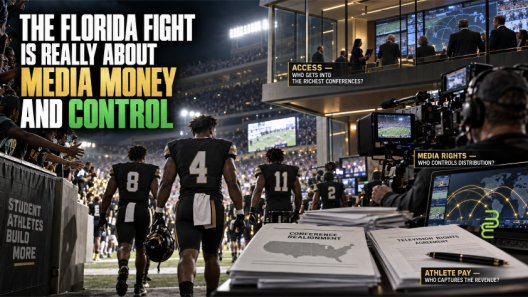
They are major economic systems built on television contracts, ticket sales, merchandise, booster donations, sponsorships, licensing, conference power, recruiting pipelines and alumni loyalty.
Black athletes are central to that product.
They help drive wins. Wins drive rankings. Rankings drive media attention. Media attention drives revenue. Revenue strengthens athletic departments, coaching salaries, donor networks, university brands, and state pride.
The NAACP’s argument is that Black athletes should understand their leverage inside that system.
The organization is calling on top football and basketball recruits to withhold commitments from targeted programs until those states restore fair congressional maps and meaningful Black representation.
It is also asking current college athletes to use their platforms, ask university leaders where they stand on voting rights, and consider their options, including the transfer portal.
That is a significant shift in how civil rights pressure is being framed.
The ask is not simply “speak out.”
The ask is: redirect the money.
Talent Is Leverage
The NAACP is trying to convert Black athletic labor into civic leverage.
That matters because big-time college sports have long depended on a contradiction. Universities profit from athletes’ performance, but athletes have historically had limited control over the economics attached to their labor.
NIL changed part of that equation.
Athletes now have more ability to monetize their name, image, and likeness. The transfer portal gives them more mobility than previous generations had. Social media gives them direct audience power.
That combination gives today’s college athletes more leverage than earlier athletes were allowed to exercise.
The NAACP is now trying to connect that leverage to voting rights.
Its message is clear: the same state cannot celebrate Black athletes on Saturday while weakening Black political power through redistricting and voting policy.
The organization launched the campaign after the Supreme Court’s ruling in Louisiana v. Callais, which the NAACP says weakened what remained of Voting Rights Act protections.
Whether people agree with the tactic or not, the economic logic is straightforward.
If Black talent helps create institutional value, then Black athletes, families, fans, and consumers can ask what responsibility those institutions have when Black communities are politically harmed.
Where the Money Is Moving
The campaign targets several revenue streams at once.
There is recruiting value. Black athletes help public universities build winning programs.
There is fan spending. Tickets, merchandise, licensed apparel, concessions, parking, and travel all feed the sports economy.
There is media value. Successful programs attract broadcasts, sponsorships, and national visibility.
There is NIL value. Athletes now bring their own audiences, marketability, and brand partnerships.
There is donor power. Alumni and boosters shape athletic budgets, facilities, recruiting strength, and institutional priorities.
The NAACP is asking fans, alumni, donors, and consumers to stop buying tickets, merchandise, and licensed apparel from targeted programs and redirect that spending to HBCUs, including athletic programs, scholarship funds, NIL collectives, bands, and alumni foundations.
That redirection is the key economic move.
The campaign is not only about denying revenue to one group of institutions. It is about shifting dollars toward Black-serving institutions that often compete with fewer resources, less media coverage, and smaller donor bases.
In other words, the campaign is not just a protest.
It is an attempt to move capital, attention, talent, and institutional pressure.
Who Owns and Who Benefits?
- Public universities own the athletic brands.
- Conferences control major parts of the media ecosystem.
- Television networks monetize the audience.
- Boosters and donors influence institutional priorities.
- State governments shape the legal and political environment around public universities.
- Athletes supply the labor and cultural value.
- Fans supply the money and attention.
- That is the ownership question.
Not ownership in the narrow sense of who owns a team, because these are public universities.
The deeper question is: who controls the system that converts Black talent into public revenue, political prestige, and institutional power?
The NAACP’s campaign asks whether Black athletes and Black consumers should continue strengthening institutions that benefit from Black participation while those institutions remain quiet as Black representation is weakened.
That is why the phrase “No Representation. No Recruitment. No Revenue.” matters.
It turns a civil rights demand into an economic formula.
Who Carries the Risk?
Black athletes could carry real risk if they participate.
A recruit who turns down a major program may give up access to national exposure, elite facilities, coaching resources, and a high-profile path to professional opportunities.
A current athlete who speaks publicly may face backlash from fans, donors, coaches, or political actors.
HBCUs could benefit from redirected talent and spending, but they would also need infrastructure, donor support, NIL resources, facilities, and media partnerships to absorb and maximize that opportunity.
Fans and alumni also face a choice.
Supporting a boycott may mean breaking emotional ties to teams and institutions that have built deep cultural loyalty over generations.
That is what makes the campaign economically serious.
It asks people to treat attention, talent, and spending as political capital.
Why This Matters to Black Communities
Voting rights are not abstract.
Political representation affects federal funding, infrastructure, public schools, health care, business development, public contracts, judicial districts, and local decision-making.
When Black voting power is diluted, the economic consequences can show up in which communities receive investment, which schools get resources, which hospitals survive, which businesses access contracts, and whose neighborhoods receive disaster recovery dollars.
That is the connection the NAACP is trying to force into public view.
The campaign says Black athletic labor should not be separated from Black civic power.
If Black athletes help create economic value for public universities, those universities should not ignore policies that reduce Black communities’ political voice.
The Bigger Signal
This story sits at the intersection of sports, labor, politics, and ownership.
It also signals a broader shift in how Black institutions may use economic pressure in the NIL era.
For decades, boycotts focused on consumer spending. This campaign goes further. It targets talent pipelines, fan dollars, donor influence, institutional reputation, and athlete mobility.
That is a more complex form of pressure.
It recognizes that Black cultural value does not only show up at the cash register. It shows up in stadiums, broadcasts, recruiting rankings, merchandise sales, social media engagement, alumni pride, and state identity.
The NAACP is saying that value can be withheld, redirected, or used as leverage.
That is the economic story underneath the headline.
Economic Implication
The NAACP’s “Out of Bounds” campaign reframes college sports as a pressure point in the fight over voting rights.
It treats Black athletic labor, fan spending, NIL influence, recruiting power, and alumni giving as assets that can be redirected.
The economic implication is simple:
Black talent is not just cultural value. It is institutional revenue.
Why It Matters
This situation exposes a contradiction inside big-time college sports.
Public universities recruit Black athletes to win games, sell tickets, attract donors and build valuable athletic brands.
But when state governments weaken Black voting power, many of those same institutions avoid public confrontation.
The NAACP is challenging that silence by asking:
Who gets to profit from Black excellence, and what responsibility comes with that profit?
The Ownership Question
Who controls more power in this story: the university brand, the athlete’s labor, the fan dollar, or the political map?
Latest posts by normbond (see all)
- Who Owns the Upside From Power? 50 Cent’s Variety Interview Reveals a Bigger TV Economics Story - October 20, 2026
- Burkina Faso Rejected a U.S. Deportation Deal. Then the Fight Moved to Visa Access. - October 19, 2026
- NC A&T Students Marched 45 Minutes to Vote. The Bigger Story Is Who Controls Access. - October 17, 2026