


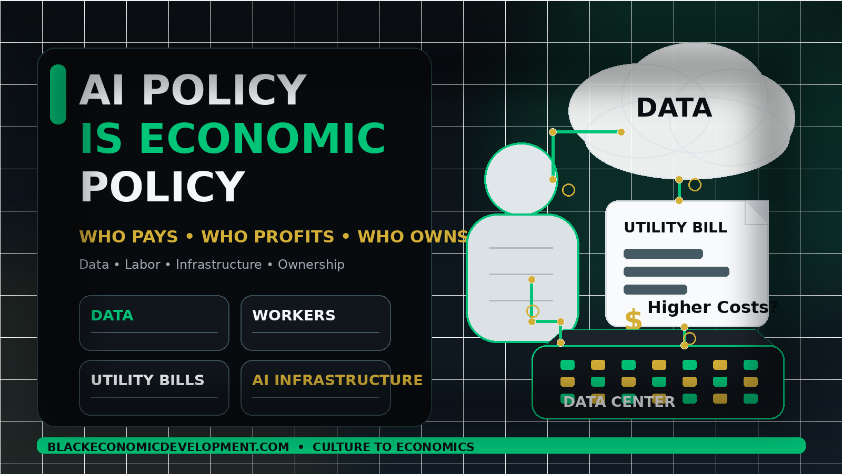
Alex Bores’ AI framework raises deeper questions about data ownership, worker protection, infrastructure costs, and who gets a real stake in the AI economy.
Source note: This analysis is based on Alex Bores’ AI Policy Framework for Congress, a campaign policy document focused on artificial intelligence, data privacy, workers, students, data centers, AI safety, and federal oversight. BlackEconomicDevelopment.com is analyzing the economic implications of the framework, not endorsing a candidate.
Artificial intelligence is usually discussed as a technology story.
But the real question is economic.
Who owns the data? Who pays for the infrastructure? Who gets displaced at work? Who captures the productivity gains? And who gets a real stake in the wealth AI creates?
Alex Bores’ AI Policy Framework for Congress puts those questions directly on the table.
The framework calls for stronger protections for children and students, national data privacy rules, penalties for malicious deepfakes.
It continues with data center accountability, worker protections, AI safety standards, stronger government oversight and policies aimed at keeping the United States competitive.
For BlackEconomicDevelopment.com, the most important part is not the campaign framing.
It is the economic structure underneath the proposal.
AI is becoming a new layer of the economy. It touches education, hiring, public infrastructure, energy bills, consumer data, small business competition, media trust, and national power.
That means AI policy is no longer just about innovation.
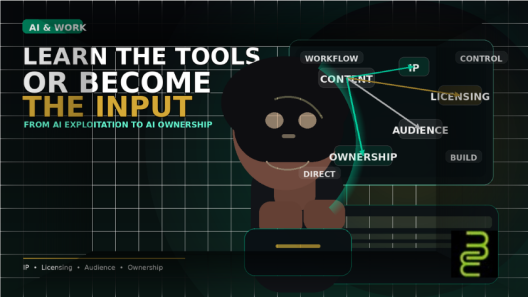
It is about ownership.
The Data Question Is an Ownership Question
One of the clearest economic claims in the framework is that personal data is more valuable than ever in the age of AI.
That matters because AI systems are trained, improved, and monetized using massive amounts of information.
Some of that information comes from public data.
Some comes from consumer behavior. Some comes from creative work. Some comes from workers, students, patients, customers, and communities who may never see a dollar from the value their information helps create.
The Bores framework calls for a national data privacy law, clear data ownership standards, a ban on companies selling personal data without explicit consent, and the right for consumers to know what data AI systems have collected about them.
That is where the Black economic development lens becomes essential.
Black communities have often been heavily studied, tracked, marketed to, scored, surveilled, and targeted — without equivalent ownership of the systems that profit from that data.
In the AI economy, data is not just information.
Data is an asset.
And if data is an asset, then the ownership question becomes unavoidable: should companies be able to extract value from people’s lives, labor, likenesses, language, and behavior without consent, compensation, or accountability?
AI May Change Work Before Workers Are Ready
The framework also focuses on workers.
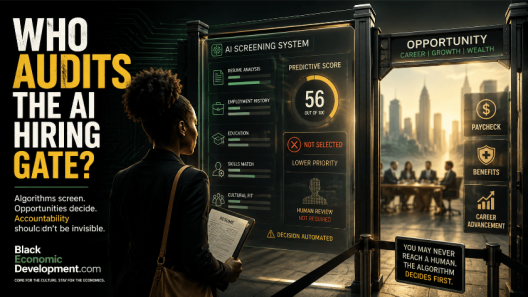
It calls for large companies to report AI-related workforce changes, tax incentives for businesses that upskill existing employees, investment in community colleges and retraining programs, and rules to prevent AI from being the sole decision-maker in hiring, firing, or promotion decisions.
That is not a side issue.
That is the center of the AI economy.
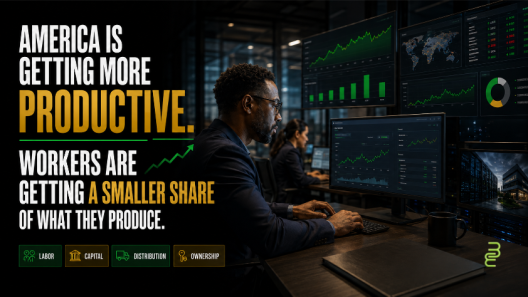
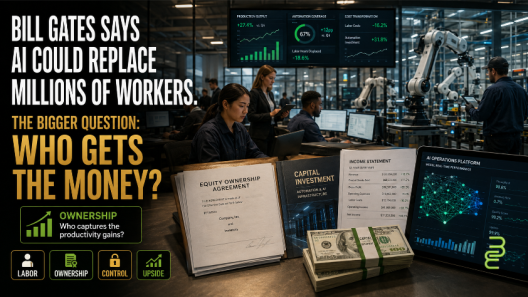
If AI increases productivity but weakens worker bargaining power, then the gains may flow mostly to shareholders, executives, and platform owners.
If AI reduces entry-level jobs, automates administrative work, or reshapes hiring, Black workers could face both risk and opportunity.
The risk is displacement, algorithmic screening, and fewer pathways into stable careers.
The opportunity is faster access to tools, new business models, higher productivity, and lower barriers to starting or scaling a business.
But opportunity is not automatic.
Without training, capital access, procurement pathways, and worker protections, AI could widen existing economic gaps.
That is why the framework’s proposed AI dividend is worth paying attention to. It calls for taxing large AI companies and returning gains to Americans so that the public receives a share of profits from a technology the public helped build.
That idea raises a bigger question: if AI is trained on public knowledge, public infrastructure, public research, and public behavior, should only private firms capture the upside?
Data Centers Reveal Who Pays for the AI Boom
The strongest economic section of the framework may be its focus on data centers.
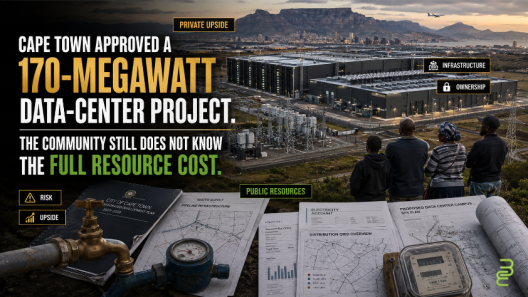
AI does not run in “the cloud” in some abstract sense. It runs through physical infrastructure: land, electricity, water, chips, buildings, transmission lines, tax incentives, and local political decisions.
The framework argues that AI companies should not stick working families with the bill while they reap billions in profits.
It calls for no utility rate hikes for residents to subsidize data center energy costs, binding community benefit agreements, green energy requirements, grid upgrade commitments, water usage monitoring, and closing loopholes that let data centers avoid property taxes.
This is a major policy-to-pocket issue.
When a data center enters a community, it can bring investment. But it can also raise questions about energy costs, water use, land use, tax breaks, jobs, and whether the local community receives lasting benefits.
For Black communities, the concern is familiar.
Major infrastructure projects often promise growth. But the benefits do not always reach the people who live closest to the impact.
If data centers increase pressure on the grid, who pays for upgrades?
If companies receive tax advantages, what do schools, cities, and residents get in return?
If AI firms need land, energy, and water to build trillion-dollar systems, should host communities receive enforceable benefits?
This is where “innovation” becomes a local economic justice issue.
Schools Are Part of the AI Economy Too
The framework’s section on children and students focuses on parental visibility, consent for risky AI tools used by minors, safeguards around chatbots, AI education, school guidelines, personalized tutoring, and banning AI-generated child sexual abuse material.
This section has an obvious safety dimension.
But it also has an economic dimension.
Students who learn how to use AI responsibly may gain an advantage in the future labor market. Students who are blocked from access, trained poorly, or left without guidance may fall behind.
That matters for Black students, schools, and families.
The AI divide will not only be about who has internet access. It will be about who has quality AI instruction, who understands the limits of these tools, who can use them to build skills, and who is protected from exploitation.
If AI becomes a basic workplace tool, then AI literacy becomes an economic development issue.
Deepfakes Threaten Trust, Labor, and Reputation
The framework also calls for technical standards and penalties to address malicious deepfakes, including in scams, political campaigns, and sexual exploitation. It supports open metadata standards that help identify whether content is real or AI-generated.
This matters beyond politics.
Deepfakes can damage reputations, steal likenesses, create fraud, manipulate voters, and exploit creators.
For Black public figures, entrepreneurs, artists, journalists, and community leaders, synthetic media raises a serious question: who controls your image when technology can copy it?
The attention economy already monetizes identity.
AI makes that identity easier to duplicate.
That means likeness rights, media verification, creator protections, and platform accountability will become more important.
Government Capacity Is Really About Power
Another section of the framework calls for building government capacity to oversee AI.
It proposes funding the Center for AI Standards and Innovation within NIST, expanding technical expertise across the federal government, requiring large AI developers to provide confidential disclosures to regulators, and preparing for rapid AI improvements before they become crises.
This is where power enters the picture.
If AI companies understand the technology far better than government does, then public oversight becomes weak by default.
Regulators cannot protect workers, consumers, students, small businesses, or communities from systems they do not understand.
That creates an accountability gap.
And accountability gaps usually benefit whoever already has the most capital, lawyers, lobbyists, engineers, and market control.
For Black communities, this is not abstract.
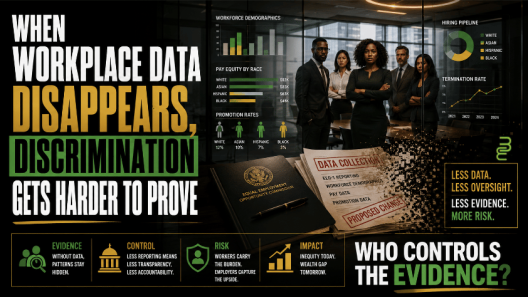
Weak oversight can show up through biased hiring tools, automated lending decisions, discriminatory targeting, surveillance, misinformation, and unequal access to economic opportunity.
Technical capacity inside government is not just bureaucracy.
It is public leverage.
The Bigger Question: Who Gets a Stake?
The framework’s subtitle says Americans need “power, protection, and a stake in the AI economy.”
That phrase is important.
Protection alone is not enough.
Communities need protection from harm, but they also need access to upside.
That means training, ownership, procurement, entrepreneurship, public investment, fair data rules, labor protections, and pathways for small businesses to use AI without becoming fully dependent on dominant platforms.
For BlackEconomicDevelopment.com, this is the key takeaway:
The AI economy will create winners.
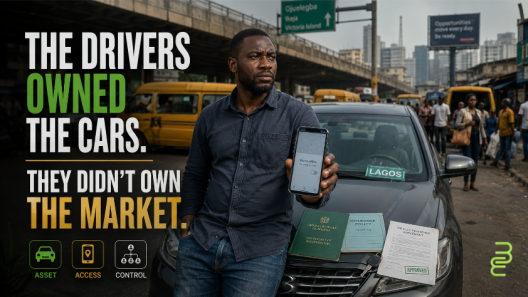
The question is whether Black workers, founders, creators, students, consumers, and communities are positioned only as users and data sources — or as owners, builders, vendors, investors, and decision-makers.
AI policy should not only ask how to prevent harm.
It should ask how to distribute power.
Economic Implication
This framework signals that AI regulation is moving into a new phase.
The debate is no longer just about whether AI is safe or innovative. It is about who controls the assets behind the AI economy: data, compute, energy, labor, infrastructure, standards, and public trust.
For Black communities, the stakes are direct.
AI could improve productivity, expand access to education, help small businesses compete, and create new ownership opportunities.
But without clear rules, it could also accelerate worker displacement, extract community data, increase household infrastructure costs, deepen algorithmic discrimination, and concentrate wealth among a small group of firms.
Why It Matters
Black economic development depends on more than access to new technology.
It depends on ownership, bargaining power, institutional capacity, and fair participation in the upside.
The Bores framework is useful because it connects AI to the real economy. Students, workers, data rights, utility bills, community benefits, public oversight, and wealth distribution.
That is the conversation more communities need to have. Lock in before AI becomes another economy where value is extracted widely but owned narrowly.
Your View
What is the biggest ownership question in AI right now: the data, the labor, the infrastructure, or the profits?

Latest posts by normbond (see all)
- The Atlanta Dream Built the Demand. The Arena Calendar Still Controls the Opportunity. - October 13, 2026
- Black-Founded Vurt Is Taking Vertical Video to TV. The Bigger Question Is Who Controls Distribution. - October 12, 2026
- Owning the Asset Is Not the Same as Controlling the System - October 10, 2026