


YouTube has spent years publicly celebrating Black creators and Black culture. On February 1, 2027, the platform is scheduled to double key monetization thresholds for new creators—raising questions about access, institutional judgment and who controls the path from audience to revenue.
February 1 is not an unfamiliar date to YouTube.
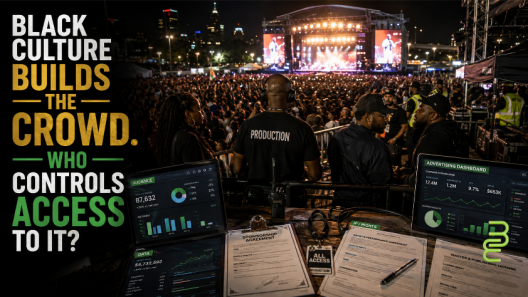
The company has used the first day of Black History Month to celebrate Black creators, direct audiences toward Black stories and publicly recognize Black culture’s influence on its platform.
On February 1, 2027, however, that same platform is scheduled to make the path to full advertising and Premium revenue harder for new creators.
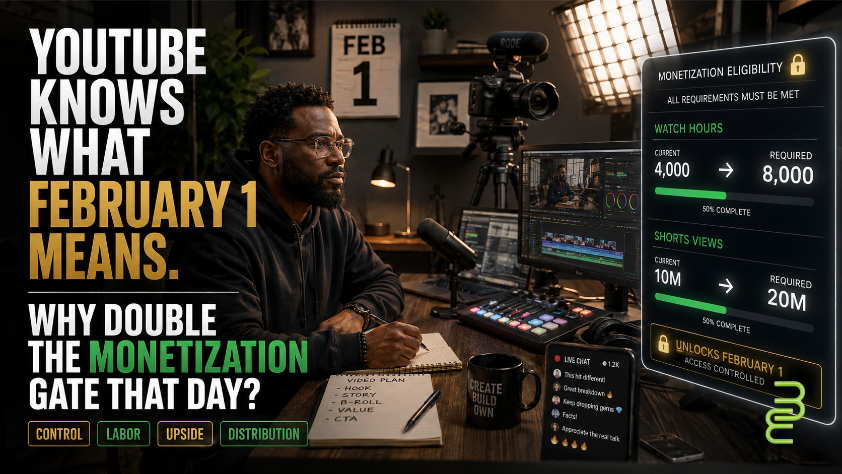
According to current reporting, new creators seeking access to YouTube Partner Program advertising and Premium revenue will need at least 1,000 subscribers plus either 8,000 qualified watch hours during the previous 365 days or 20 million qualified Shorts views over 90 days.
The current requirements are 1,000 subscribers plus either 4,000 watch hours or 10 million Shorts views.
That means YouTube is doubling two of the major performance thresholds new creators must clear before gaining access to that layer of platform revenue.
Existing YouTube Partner Program members are not subject to the new entry threshold.
The new requirements apply to everyone. There is no evidence that YouTube selected February 1 because it is Black History Month, and there is currently no public evidence establishing that the higher thresholds will disproportionately affect Black creators.
But that does not make the timing economically irrelevant.
It raises a different question:
For a company that has spent years publicly recognizing Black creators’ importance to its culture, how did February 1 become the effective date for doubling a major monetization entry barrier?
YouTube Controls the Gate
Creators do the filming.
They edit videos, develop ideas, build communities, attract audiences and create intellectual property.
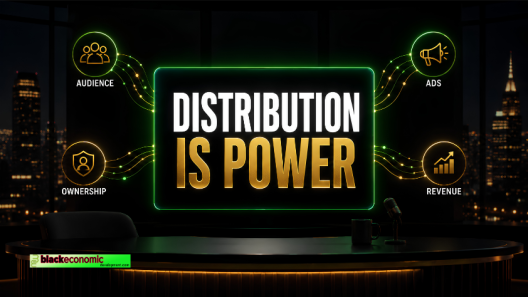
But YouTube controls the infrastructure connecting that activity to one of the platform’s primary revenue-sharing systems.
That distinction matters.
YouTube is not preventing people from creating or publishing videos. It is changing the point at which a new creator becomes eligible for an important layer of platform revenue.
The economic question is therefore not simply whether creators can participate.
It is how far they must travel before the platform opens the monetization gate.
Consider what happens between 4,000 and 8,000 qualified watch hours.
- The creator can still be producing.
- The audience can still be watching.
- The channel can still be generating engagement.
But under the new requirements, that creator remains outside the advertising and Premium revenue-sharing threshold for longer.
The same dynamic applies to Shorts creators moving from a 10 million-view requirement to 20 million qualified views in 90 days.
That is an access question.
And YouTube controls the access point.
YouTube Has Already Recognized the Importance of Black Creators
The timing stands out because YouTube has a documented history of recognizing Black creators and Black culture.
On February 1, 2018, YouTube launched Black History Month programming highlighting Black creators.
On February 1, 2022, the company again launched Black History Month programming celebrating Black stories, voices and culture.
And in 2020, YouTube announced a $100 million #YouTubeBlack Voices Fund designed to amplify Black voices and support Black creators and artists.
Those commitments matter because they establish something important:
YouTube knows the cultural significance of February 1.
It also knows that Black creators have played a meaningful role in shaping culture on its platform.
That makes the February 1, 2027 monetization change a legitimate test of institutional judgment.
Did YouTube’s previous cultural commitments become durable institutional knowledge capable of influencing ordinary product, policy and monetization decisions?
Or did that awareness remain contained inside creator programs and Black History Month campaigns?
The strongest accountability case does not require proving discriminatory intent.
It requires asking how the decision was made.
Why This Is Bigger Than a Platform Policy Change
The creator economy should not be romanticized.
Building an audience does not guarantee a sustainable business. Platform rules can change. Revenue can fluctuate. Distribution remains heavily dependent on companies creators do not control.
But digital creation can still provide an economically important pathway.
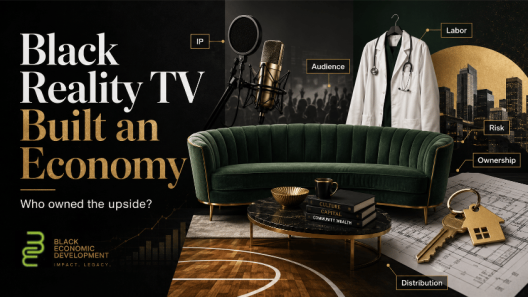
A creator can potentially move from labor to audience, audience to revenue, revenue to intellectual property, and intellectual property to business ownership.
That progression is especially worth examining now.
The July 2026 labor-market figures cited in BEDC’s source review put Black unemployment at 6.3% compared with 3.6% for White workers.
At the same time, artificial intelligence continues to change the task structure of many occupations.
That does not mean AI exposure automatically equals job loss.
Research on AI exposure generally signals the potential for job and task transformation rather than providing a deterministic forecast of which jobs will disappear.
Still, these shifts make alternative pathways to income, business formation and ownership increasingly important.
A YouTube channel cannot solve labor-market inequality.
The creator economy cannot close the racial wealth gap by itself.
But when workers are increasingly encouraged to develop digital skills, create independent income streams and build businesses around their knowledge, talent or creativity, the rules governing access to platform revenue become part of the economic-development conversation.
The Missing Data Belongs to YouTube
YouTube knows far more about its creator ecosystem than outside observers do.
The company can see which creators are approaching monetization thresholds.
It can study how long different creators take to qualify.
It can examine whether higher thresholds affect participation differently across creator communities, geographies and categories.
That makes transparency the appropriate next step.
BEDC believes several questions deserve answers:
Why did YouTube decide to increase the watch-hour requirement from 4,000 to 8,000?
Why increase the Shorts threshold from 10 million to 20 million qualified views?
What evidence showed that doubling the thresholds, rather than making a smaller adjustment, was appropriate?
Why was February 1, 2027 selected as the effective date?
Was the significance of February 1 as the beginning of Black History Month considered during product, policy, legal, communications or executive review?
Did YouTube conduct a demographic impact analysis of the higher entry requirements?
And if so, what did it find regarding Black creators and other underrepresented creator communities?
Those questions do not presume an answer.
They ask the institution controlling the gate to explain how it exercised that control.
There is another economic question worth examining:
What advertising, subscription, data or other economic value does YouTube derive from viewing activity generated by channels that have not yet qualified for full YPP advertising and Premium revenue sharing?
Creators below the threshold can still create value.
Understanding who captures that value is central to understanding the economics behind the policy.
Celebrating Black Culture Is Not the Same as Institutionalizing Economic Regard
This story points toward a broader issue.
Large institutions have become increasingly skilled at recognizing Black culture.
- They know the calendar.
- They know the creators.
- They know the language of representation.
- They understand that Black creativity can move audiences, shape trends and generate economic activity.
But cultural recognition and economic inclusion are not the same thing.
The deeper test is whether awareness of Black participation reaches the decisions governing access, income, capital, distribution, ownership and control.
YouTube’s February 1 decision does not prove that Black creators were targeted.
That is not the claim.
The more important question is what happens after an institution learns to celebrate Black contribution.
Does that knowledge remain visible when the institution sets the economic rules?
That is the question BEDC will continue following between Black Business Month and Black History Month.
And before February 1, 2027 arrives, YouTube should have an answer.
The Economics Behind It
Money: New creators will have to generate substantially more qualifying audience activity before becoming eligible for the relevant layer of YouTube advertising and Premium revenue sharing.
Ownership: Creators may own their content, brands and intellectual property, but YouTube owns the platform infrastructure governing access to YPP monetization.
Control: YouTube sets the eligibility rules and determines when those rules change.
Access: The qualifying watch-hour and Shorts-view requirements are scheduled to double for new entrants.
Risk: Creators bear the additional production time, costs and uncertainty required to reach the higher threshold.
Upside: Creators who successfully build audiences, revenue, intellectual property and independent businesses may create pathways toward ownership—but dependence on platform-controlled distribution remains a structural risk.
Why It Matters
Black economic participation in the digital economy cannot be measured only by visibility.
The bigger question is whether creators can convert cultural production into income, intellectual property, businesses and durable ownership—and who controls the infrastructure governing that conversion.
When the gate changes, the economics change with it.
Have you seen another case where Black cultural or economic contribution is celebrated in one part of an institution but seems absent from the decisions determining access, ownership, income or control? Send it to BEDC. Subscribe to The Economics Behind It as we follow the economics from Black Business Month to February 1.